Tojiro knives official · Since 1953 · Tsubame-Sanjo
Tojiro knives: sharpness that outlasts fashion
Tojiro has forged kitchen knives in the steel town of Tsubame-Sanjo for over seventy years. VG10 super steel, hard to 60 Rockwell, finished by hand and made to work for a lifetime.
Shop the ClassicsThe steel behind sharpness
A good knife keeps its edge after months of honest work. Tojiro pairs a hard VG10 core with soft stainless cladding, so the steel that touches your food stays razor thin while the outer layers take the daily wear. The result is a blade you can rely on, sharpen and pass on.
Heritage
1953
Founded
The Fujita family sets up shop in Tsubame-Sanjo, Niigata, a region famous for metalwork.
70+
Years
Continuous knife making under one roof, generation after generation.
VG10
Core steel
A super steel core with high edge retention, clad for easy care.
60°
Hardness
Rockwell hardness on the Classic range, for edges that hold.
Best sellers from the Classic range
One steel, one standard, across the shapes a kitchen actually needs.
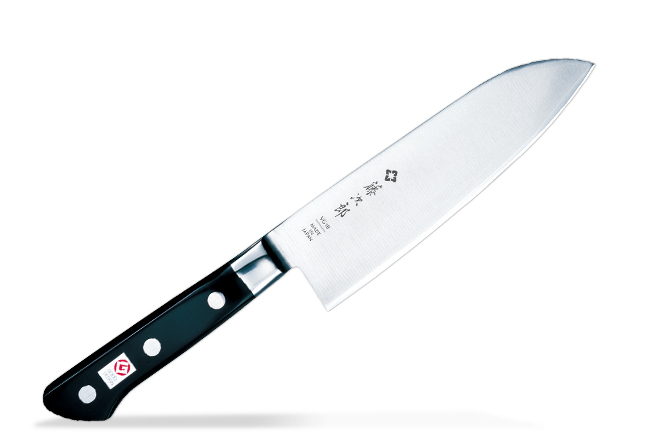
F-503
Classic Santoku 170mm
All-rounder for meat, fish and vegetables. A kitchen favourite.
Check Price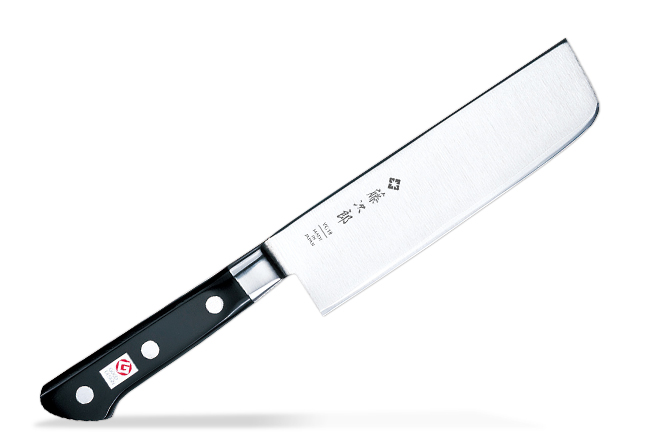
F-502
Classic Nakiri 165mm
Straight-edge vegetable knife built for fast, clean chopping.
Check Price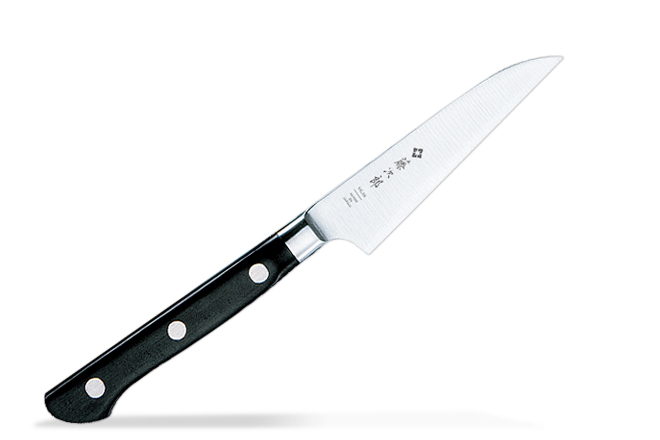
F-800
Classic Paring Knife 90mm
Small, precise, comfortable. The quiet workhorse of the kitchen.
Check Price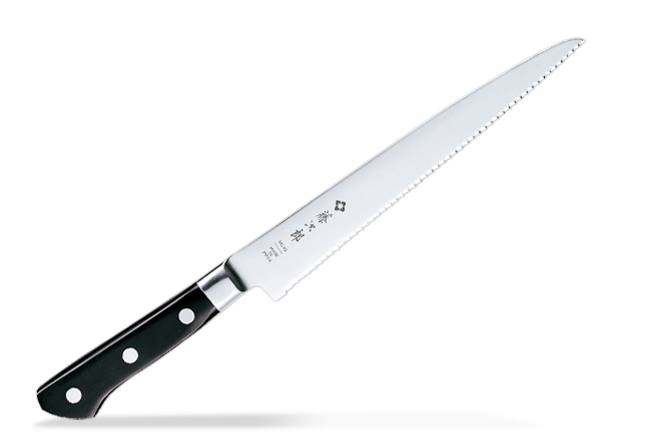
F-828
Classic Bread Slicer 215mm
Serrated edge that glides through crusts without crushing the crumb.
Check Price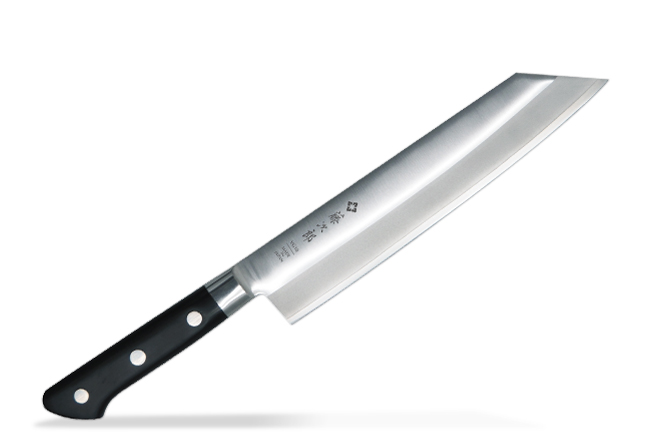
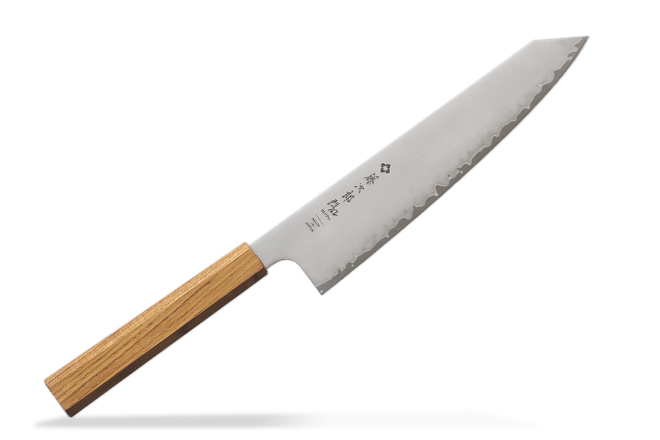
Flagship
The RepPU and Sakuya lines
When the Classics are not enough, Tojiro reaches further. The RepPU and Sakuya series use powdered and premium steels with thinner grinds and finer finishing, aimed at cooks who spend every day at the board.
Powdered steel
Fine grain, high polish
Hand finished
Sharpened on stone
Three steels, three temperaments
Tojiro builds the same care into every range, then picks the steel that suits the job.
| Steel | Character | Used in |
|---|---|---|
| VG10 | A vanadium super steel that holds a fine edge and resists wear. Clad in soft stainless for easy upkeep. | Classic, Classic Damascus |
| SG2 / Powdered | Micro-fine grain from powder metallurgy. Takes a razor edge and a mirror polish. | RepPU, Sakuya |
| Shirogami | High-carbon white steel for single-bevel and traditional knives. Quick to sharpen, edges that sing. | SHIROGAMI range |
Used daily, rated honestly
What home cooks and chefs say after months at the cutting board.
★★★★★
I have used this chef knife almost every evening for a year. The edge still surprises me every time I pick it up.
 Daniel M.
Home cook, Berlin
Daniel M.
Home cook, Berlin
★★★★★
We run a small kitchen and the Santoku takes the abuse. Sharpens back to perfect in minutes on a whetstone.
 Aisha R.
Head chef, Leeds
Aisha R.
Head chef, Leeds
★★★★★
My first Japanese knife and I understand the hype now. Balanced, precise and beautiful to use. Worth every penny.
 Thomas K.
Home cook, Austin
Thomas K.
Home cook, Austin
★★★★★
I teach knife skills and recommend these to every student. Reliable steel, honest pricing, and an edge that holds through a full service.
 Marcus T.
Culinary instructor, Lyon
Marcus T.
Culinary instructor, Lyon
★★★★★
Gifted the Nakiri to my mother after she admired mine. She reached for it first at every meal, every day since.
 Sofia L.
Food writer, Lisbon
Sofia L.
Food writer, Lisbon
★★★★★
Five years into the Classic Paring knife and it still feels brand new. The handle fits like it was made for my hand.
 Johan V.
Home cook, Amsterdam
Johan V.
Home cook, Amsterdam
Questions worth asking
Are Tojiro knives good?
Yes, and the reputation is earned. The Classic range pairs a hard VG10 core with
soft stainless cladding, so the edge holds up to daily use while the blade stays
easy to sharpen at home. Professional cooks and home cooks alike have trusted
Tojiro for generations.
Where are Tojiro knives made?
Every Tojiro knife is made in Tsubame-Sanjo, Niigata, Japan, where the company has
forged blades since 1953.
What steel do Tojiro knives use?
The Classic range uses a VG10 super steel core sandwiched between soft stainless
steel cladding, hardened to 60 Rockwell. This gives a sharp, long-wearing edge that
is still easy to sharpen at home. Damascus versions add a 37-layer stainless damascus
cladding.
Can Tojiro knives go in the dishwasher?
No. The dishwasher can dull the edge and stain the steel. Wash by hand, dry
straight away, and store the blade on a magnetic strip or in a blade guard.
How do you sharpen a Tojiro knife?
Use a whetstone. Start coarse, finish fine, and match the angle to the blade
profile. The VG10 edge responds quickly, so a light touch is enough.
Which Tojiro knife is best?
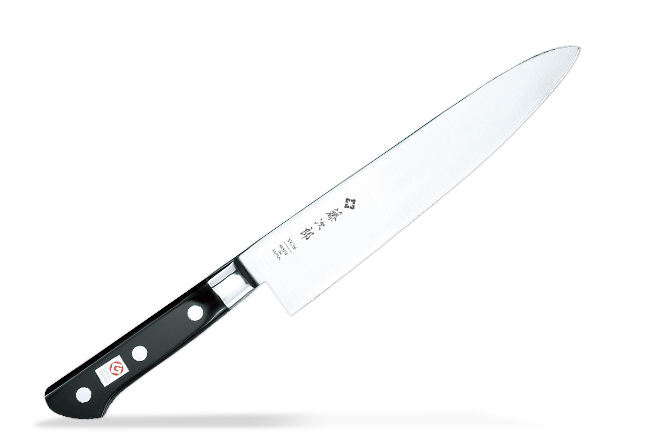
The 210mm gyuto (F-808) is the most popular first pick: a straight-edged all-rounder
that covers most kitchen work. Cooks who chop mostly vegetables often reach for the
165mm nakiri instead. The Damascus line adds the same VG10 core under a 37-layer
stainless cladding for a decorative blade with identical performance.
Is the Tojiro DP a good first Japanese knife?
Yes, and it is a common recommendation for a reason. The DP (Diamond Premium) line
gives you a VG10 core hardened to 60 Rockwell without the high price of hand-forged
blades, and the softer outer cladding makes it forgiving to sharpen at home.
What is the difference between Tojiro DP and Tojiro Damascus?
Same core, different look. The DP uses a plain stainless cladding, while the Damascus
version wraps the VG10 core in a 37-layer folded pattern. Cutting feel is near
identical; the Damascus costs more because the forging and finishing take longer.
What sharpening angle should I use for a Tojiro DP knife?
Around 10 to 15 degrees per side on a whetstone. The DP edge holds up well at a
slightly steeper 15 degrees, which is also easier to maintain by hand. Keep the angle
consistent along the blade and the edge will stay sharp longer.
How often should Tojiro knives be sharpened?
With regular home use, a light touch-up every one to two months keeps the edge honest.
Hone the blade between whetstone sessions. Serrated blades like the 235mm bread
slicer (F-737) cannot be re-sharpened with a stone; send them out instead.
Do Tojiro knives rust?
The VG10 core is stainless and does not rust easily, but the edge can still react to
salt, acid and moisture. Rinse, dry, and store away from water. A wiped-down blade
after every use is all it takes to keep the edge clean.
What is the difference between Tojiro and Fujitora?
Fujitora is the name the company sells under in some markets; Tojiro is the brand on
the blade. Both point to the same maker in Tsubame-Sanjo, and both carry the VG10
Classic line. You can pick either name and get the same knife.
Tojiro vs Shun: which knife is better?
Both are well built, but they target different buyers. Tojiro keeps the price down by
using standard stainless cladding, while Shun charges more for its decorative
Damascus finish. On the board, a Tojiro Classic with a VG10 core performs close to a
blade many times its price.
What is the difference between a Tojiro gyuto and santoku?
The gyuto is the chef's knife: a longer, curved blade for rocking cuts. The santoku is
shorter and flatter, designed for chopping straight down. The 210mm gyuto is the
general workhorse; a santoku suits cooks who mostly handle vegetables and prefer a
lighter blade.
Where can I buy authentic Tojiro knives?
This is the official Tojiro knives website. Head to our shop for the full range,
including the Classics, Damascus and professional lines. Browse the shop.
Find the knife you will reach for daily
Made in Japan. Priced for real kitchens. Ready to ship.
Shop Tojiro Knives